
Rainy days can quickly turn an energetic preschooler into a restless bundle of boredom. When outdoor play is no longer an option, many parents find themselves searching for ways to keep their children entertained without relying on screens.
The good news is that there are plenty of indoor activities for preschoolers that are not only fun but also support learning and development. From creative crafts and movement games to simple educational challenges, indoor play can help children build important skills while having a great time.
In this guide, you’ll discover 25 engaging rainy day activities that encourage creativity, physical movement, problem-solving, and independent play. Most require little preparation and use items you probably already have at home.
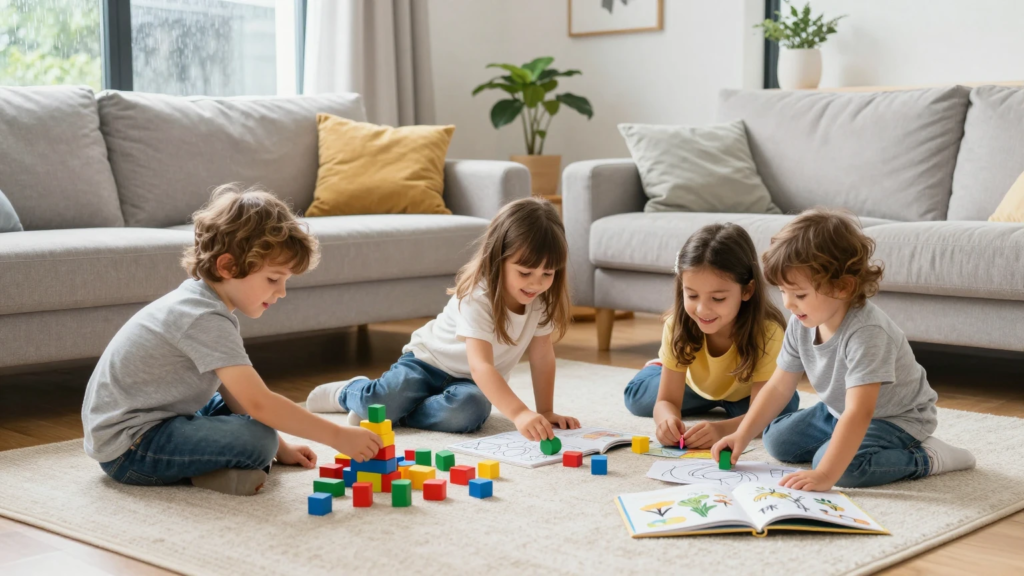
Table of Contents
Indoor Activities for Preschoolers
1. Indoor Treasure Hunt
Hide small toys or household objects around the house and provide simple clues. Younger preschoolers can search using picture clues, while older children may enjoy verbal hints.
Benefits:
- Encourages problem-solving
- Improves observation skills
- Promotes movement
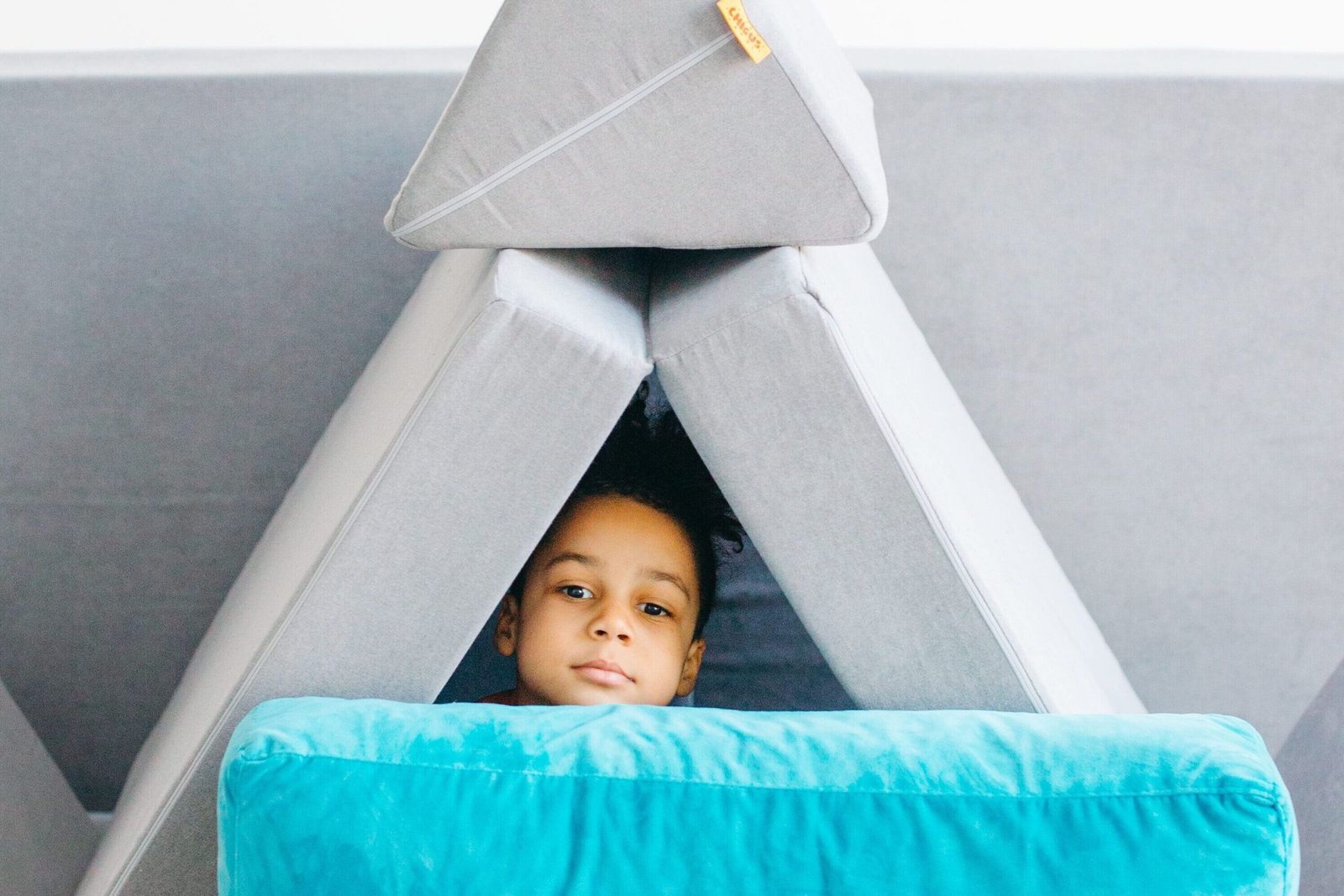
2. Build a Pillow Fort
Few indoor activities for preschoolers are as exciting as creating a secret fort using blankets, cushions, and chairs. Once the fort is complete, children can read books, play pretend games, or enjoy a quiet snack inside.
Benefits:
- Encourages creativity
- Supports imaginative play
- Develops planning skills
3. Color Sorting Game
Gather toys, blocks, or household items and ask your child to sort them by color.
Benefits:
- Builds color recognition
- Introduces early math concepts
- Improves categorization skills
4. Dance Party
Turn on upbeat music and let your preschooler dance freely. You can add challenges like:
- Freeze dance
- Follow the leader
- Animal dance moves
Benefits:
- Develops coordination
- Burns energy
- Supports physical health
If you’re trying to reduce screen time, many of these ideas also work well alongside our guide to Screen-Free Activities for Kids Ages 3–5.
5. Play Dough Fun
Play dough offers endless opportunities for creative learning. Children can make:
- Animals
- Letters
- Numbers
- Shapes
- Food items
Benefits:
- Strengthens hand muscles
- Improves fine motor skills
- Encourages creativity
6. DIY Obstacle Course
Use pillows, tape lines, chairs, and cushions to create an obstacle course. Ask children to:
- Jump
- Crawl
- Balance
- Hop
Benefits:
- Improves balance
- Enhances coordination
- Provides physical exercise
7. Storytelling Basket
Fill a basket with random objects and challenge your child to create a story using them.
Benefits:
- Develops vocabulary
- Encourages imagination
- Improves communication skills
8. Indoor Bowling
Set up empty plastic bottles as bowling pins and use a soft ball to knock them down.
Benefits:
- Hand-eye coordination
- Focus and concentration
- Counting practice
9. Shape Hunt
Ask your child to find circles, squares, rectangles, and triangles around the house.
Benefits:
- Shape recognition
- Observation skills
- Early geometry concepts
10. Water Transfer Activity
Provide cups, spoons, funnels, and containers for supervised water play.
Benefits:
- Fine motor development
- Concentration
- Sensory exploration
11. Sticker Art Station
Give children sticker sheets and blank paper to create scenes or stories.
Benefits:
- Hand control
- Creativity
- Visual planning
12. Paper Plate Crafts
Transform paper plates into:
- Animals
- Masks
- Clocks
- Flowers
Benefits:
- Artistic expression
- Scissor practice
- Fine motor skills
13. Alphabet Matching
Write letters on cards and match them with objects that begin with the same sound.
Benefits:
- Early literacy
- Letter recognition
- Vocabulary building
14. Indoor Scavenger Hunt
Create a checklist of items to find around the house.
Examples:
- Something blue
- Something soft
- Something round
Benefits:
- Observation skills
- Independent thinking
- Problem-solving
15. Building Block Challenge
Ask children to build:
- Towers
- Bridges
- Houses
- Castles
Benefits:
- Engineering skills
- Creativity
- Spatial awareness
16. Sock Toss Game
Roll socks into balls and toss them into baskets placed at different distances.
Benefits:
- Coordination
- Distance judgment
- Active play
17. Bubble Wrap Path
Lay bubble wrap on the floor and let children walk, hop, or jump across it under supervision.
Benefits:
- Sensory stimulation
- Physical activity
- Balance development
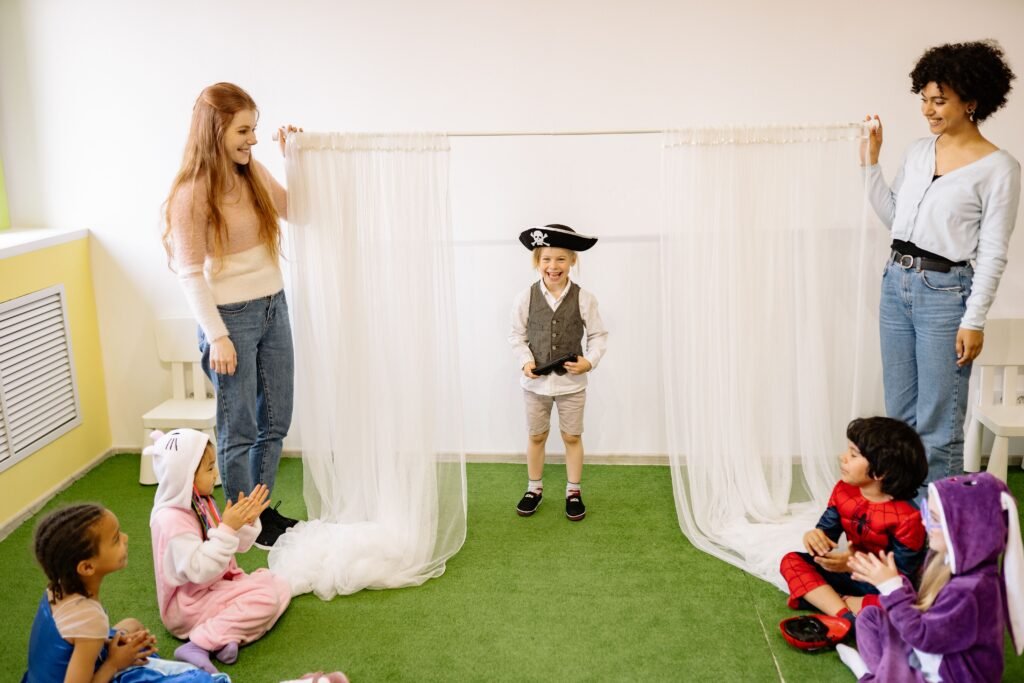
18. Puppet Show
Create puppets using socks, paper bags, or craft materials.
Benefits:
- Language development
- Creativity
- Confidence building
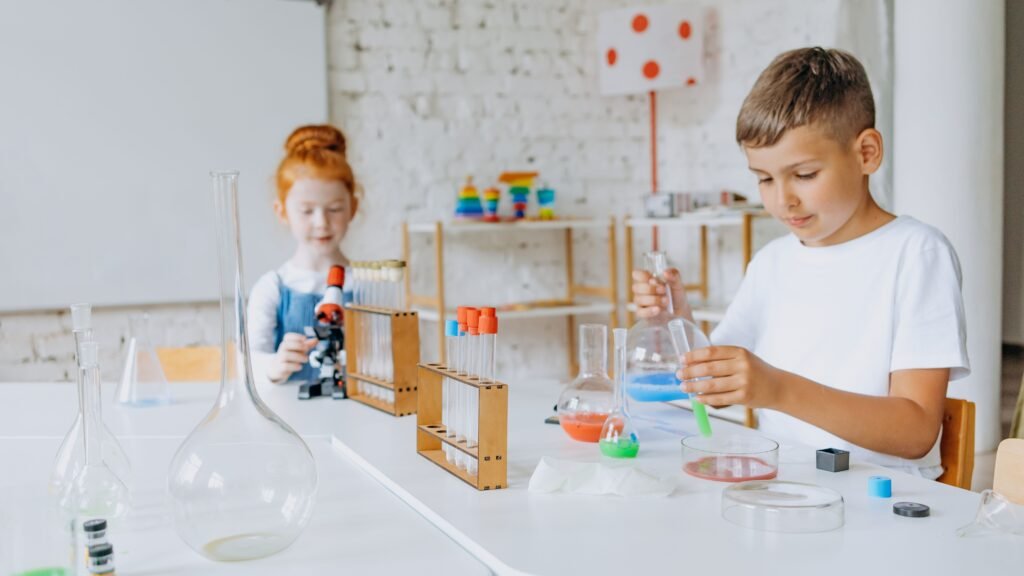
19. Simple Science Experiment
Mix baking soda and vinegar to create a fun fizzy reaction.
Benefits:
- Curiosity
- Early STEM learning
- Observation skills
For families looking for more educational projects, STEM-based indoor activities can be a wonderful way to introduce science concepts through play.
20. Puzzle Time
Choose age-appropriate puzzles and work together to complete them.
Benefits:
- Problem-solving
- Patience
- Logical thinking
21. Animal Movement Game
Ask children to move like different animals.
Examples:
- Hop like a rabbit
- Waddle like a duck
- Crawl like a bear
Benefits:
- Physical development
- Imagination
- Balance
22. Finger Painting
Use washable paints and large sheets of paper.
Benefits:
- Creativity
- Sensory exploration
- Fine motor skills
23. Counting Treasure Jars
Fill jars with buttons, pom-poms, or blocks and encourage counting activities.
Benefits:
- Number recognition
- Early math skills
- Concentration
24. Indoor Camping Adventure
Create a pretend campsite using blankets and pillows.
Children can:
- Tell stories
- Read books
- Pretend to explore nature
Benefits:
- Imaginative play
- Social development
- Creativity
25. Read-Aloud Time
Reading remains one of the most valuable indoor activities for preschoolers.
For additional quiet-time learning, many parents also use carefully selected activity books for preschoolers that combine fun with early educational skills.
Choose books with:
- Repetition
- Bright illustrations
- Interactive questions
Benefits:
- Vocabulary growth
- Listening skills
- Language development
If your child enjoys books, activity books can also provide educational entertainment during rainy afternoons.
Best Products to Make Indoor Activities for Preschoolers More Fun
Indoor activities for preschoolers become even more engaging with the right supplies and toys. While many of the activities in this guide use everyday household items, a few carefully chosen products can encourage creativity, strengthen fine motor skills, and keep little ones entertained for longer. Below are our top recommendations to help you get even more from these indoor activities.
| Product | Best For | Rating | Explore |
|---|---|---|---|
| Finger Paint Set (27PCS) | Finger Painting | ⭐ 4.5 | View on Amazon |
| Kwik Stix Paint Sticks | Mess-Free Painting | ⭐ 4.8 | View on Amazon |
| Melissa & Doug Reusable Sticker Pad – Habitats | Sticker Activities | ⭐ 4.5 | View on Amazon |
| Olly Kids Arts & Crafts Supplies Set | DIY Craft Projects | ⭐ 4.7 | View on Amazon |
| Story Time Finger Puppets (20-Piece Set) | Storytelling & Role Play | ⭐ 4.4 | View on Amazon |
| The Floor is Lava! Game | Active Indoor Play | ⭐ 4.6 | View on Amazon |
| BONNYCO Giant Farm Floor Puzzle | Puzzle Time | ⭐ 4.7 | View on Amazon |
| Chuckle & Roar ABC & 123 Wooden Puzzles | Alphabet Learning | ⭐ 4.3 | View on Amazon |
| Meland Kids Camping Set with Tent | Indoor Camping | ⭐ 4.7 | View on Amazon |
| Dot Markers for Toddlers (6 Colors) | Dot Marker Art | ⭐ 4.5 | View on Amazon |
⭐ Our Top 5 Picks ⭐
Choosing just a few products wasn’t easy, but these five stood out for their quality, educational value, and ability to support multiple indoor activities for preschoolers. Whether your child enjoys painting, pretend play, puzzles, or active games, these are our favorite recommendations.
🥇 Best Overall
Meland Kids Camping Set with Tent
If you’re looking for one product that encourages hours of imaginative play, the Meland Kids Camping Set is our top choice. It transforms any room into a pretend campsite while encouraging storytelling, role-playing, and social interaction.
Why We Love It
- Encourages imaginative play
- Includes multiple camping accessories
- Ideal for independent and family play
- Great value for money
🎨 Best for Creative Play
27PCS Kids Washable Finger Paint Set
This complete finger painting kit includes paints, brushes, sponges, and paper, making it perfect for creative indoor art sessions while helping children develop fine motor skills.
Best For
- Sensory Play
- Finger Painting
- Color Recognition
🧩 Best Educational Activity
BONNYCO Giant Farm Floor Puzzle
Large puzzle pieces are easy for preschoolers to handle and help develop concentration, problem-solving, and hand-eye coordination.
Best For
- Puzzle Time
- Independent Learning
- Family Play
🏃 Best Active Indoor Game
The Floor is Lava! Game
Perfect for rainy days, this game keeps children moving while improving balance, coordination, and gross motor skills.
Best For
- Obstacle Courses
- Active Play
- Family Game Nights
🖍 Best Mess-Free Art Option
Kwik Stix Paint Sticks
Parents love these paint sticks because they dry quickly and create minimal mess while still letting children enjoy painting and craft projects.
Best For
- Everyday Creative Play
- Paper Plate Crafts
- Coloring Projects
Why Indoor Activities Are Important for Preschoolers
Indoor play is much more than a way to pass time during bad weather. Many of these skills align with the developmental progress outlined in the CDC developmental milestones for preschool-aged children. Indoor play also helps preschoolers build independence, emotional regulation, and problem-solving skills by encouraging children to explore, experiment, and complete activities at their own pace.
Well-designed activities help children develop:
Fine Motor Skills
Activities such as coloring, sticker art, puzzles, and play dough strengthen hand muscles needed for writing and self-care tasks.
Gross Motor Skills
Obstacle courses, dance parties, and movement games help children improve coordination and balance.
Cognitive Development
Treasure hunts, matching games, and puzzles encourage critical thinking and problem-solving.
Creativity and Imagination
Pretend play, storytelling, and arts and crafts support creative expression and independent thinking. Resources from PBS Parents also highlight how play-based learning helps children develop creativity, confidence, and problem-solving skills at home.
Language Development
Reading, storytelling, and puppet shows help expand vocabulary and communication skills.
Tips for Planning Rainy Day Activities
To keep preschoolers engaged throughout the day:
- Rotate activities every 20–30 minutes.
- Alternate active and quiet play.
- Keep supplies organized in activity bins.
- Encourage independent exploration.
- Focus on fun rather than perfection.
Having a variety of indoor activities for preschoolers ready can make rainy days feel exciting instead of stressful. Many of these rainy-day activities can be enhanced with the best educational toys for 3-5 year olds, helping children build creativity, critical thinking, and fine motor skills while having fun indoors.
How to Choose the Right Indoor Activity for Your Preschooler
Every preschooler enjoys different types of play, so choose activities based on your child’s interests, energy level, and developmental stage. Active games like obstacle courses and dance parties are ideal when children need movement, while puzzles, storytelling, crafts, and reading work well for quieter moments. Rotating between physical, creative, sensory, and educational activities throughout the day helps keep preschoolers engaged while supporting well-rounded development.
Frequently Asked Questions
What are the best indoor activities for preschoolers?
The best indoor activities for preschoolers combine fun and learning. Popular options include treasure hunts, pillow forts, play dough, obstacle courses, puzzles, arts and crafts, storytelling, and simple science experiments. These activities help children develop creativity, problem-solving skills, and physical coordination while staying entertained indoors.
How can I keep my preschooler busy on a rainy day?
You can keep your preschooler busy on a rainy day by creating a mix of active and quiet activities. Alternate between movement games such as dance parties and obstacle courses, and calmer activities like coloring, reading, puzzles, or building blocks. Rotating activities every 20 to 30 minutes helps maintain interest and engagement.
Are indoor activities important for preschool development?
Yes. Indoor activities support many areas of child development, including fine motor skills, gross motor skills, language development, creativity, social skills, and early math and literacy concepts. Structured play also helps children build confidence and independence.
What are some screen-free indoor activities for preschoolers?
Screen-free indoor activities for preschoolers include treasure hunts, arts and crafts, play dough, scavenger hunts, storytelling, reading books, building block challenges, puppet shows, and sensory play activities. Parents looking for additional ideas can also explore our guide to screen-free activities for kids ages 3–5.
How long should preschoolers spend on one activity?
Most preschoolers stay focused on a single activity for about 15 to 30 minutes. However, this varies depending on age and interest. Switching between active play and quiet activities throughout the day can help prevent boredom and maintain attention.
What indoor activities help preschoolers learn?
Educational indoor activities include alphabet matching games, counting activities, shape hunts, puzzles, building blocks, reading sessions, and simple science experiments. These activities help children develop literacy, math, critical thinking, and problem-solving skills in a fun way.
Final Thoughts
Rainy weather doesn’t have to mean boredom or endless screen time. With a little creativity, parents can turn a gloomy day into an opportunity for learning, movement, and fun.
These indoor activities for preschoolers support important developmental skills while keeping children entertained at home. Whether you’re building a pillow fort, conducting a simple science experiment, or enjoying story time together, every activity creates valuable learning experiences and lasting memories.
Related Preschool Learning Resources
Looking for more ways to support your preschooler’s learning and development? Explore our collection of expert guides designed to encourage creativity, curiosity, and hands-on learning. Whether you’re searching for engaging indoor activities, educational toys, STEM projects, sensory play ideas, fine and gross motor activities, kindergarten readiness tips, outdoor adventures, or the best activity books for preschoolers, these resources will help make learning fun every day.
- Best Activity Books for Preschoolers
- Screen-Free Activities for Kids Ages 3–5
- Best Educational Toys for 3–5 Year Olds
- STEM Activities for Preschoolers
- Fine Motor Activities for Preschoolers
- Gross Motor Activities for Preschoolers
- Kindergarten Readiness Activities
- Sensory Activities for Preschoolers
- Outdoor Activities for Preschoolers
Pingback: Screen Free Activities for Kids: 25 Fun Ideas for Ages 3–5
Pingback: Best Activity Books for Preschoolers: 15 Fun Learning Picks for Ages 3–5
Pingback: 15 Best Educational Toys for 3–5 Year Olds That Make Learning Fun