
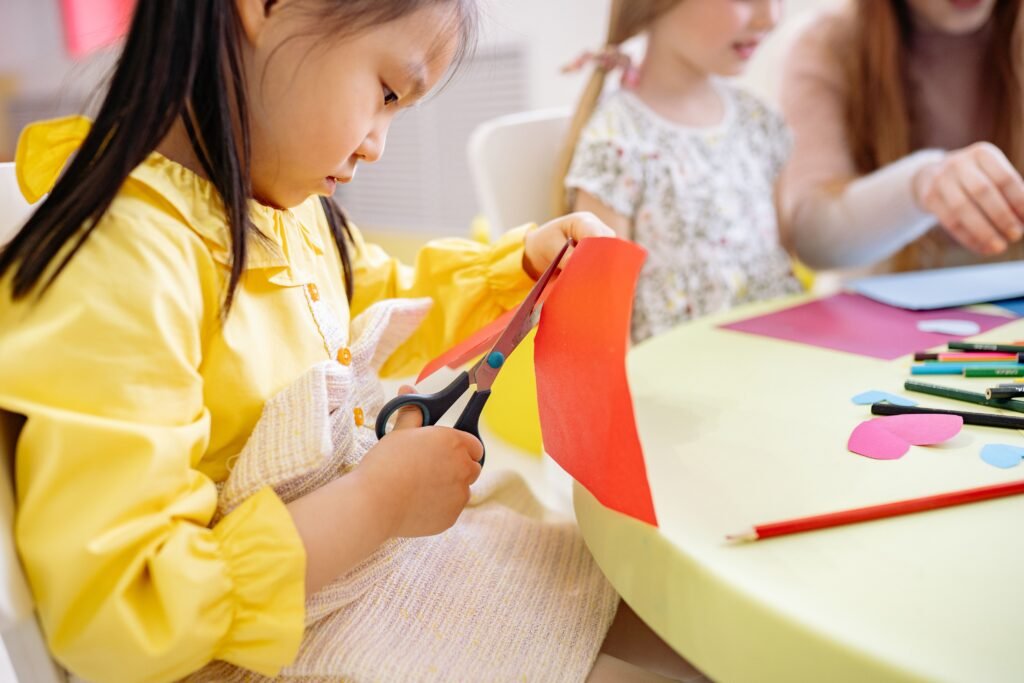
Fine motor activities for preschoolers play an important role in helping young children develop the small muscles in their hands and fingers. These skills are essential for everyday tasks such as holding a pencil, drawing, cutting with scissors, buttoning clothes, using utensils, and eventually learning to write.
During the preschool years, children learn best through hands-on play and exploration. Fun activities that involve squeezing, pinching, threading, sorting, and building can strengthen hand muscles while improving coordination and control. The stronger these skills become, the easier it is for children to complete important school and self-care tasks independently.
Many of these activities also work well as screen-free activities for kids ages 3–5, helping children learn important skills while having fun away from digital devices.
Whether you’re a parent, teacher, or caregiver, these fine motor activities for preschoolers can easily be done at home or in the classroom using simple materials. Let’s explore some fun and engaging ways to help preschoolers build strong hand skills through play.
Table of Contents
Why Fine Motor Activities for Preschoolers Matter
Fine motor skills involve the small muscles of the hands, fingers, and wrists working together with the eyes to perform precise movements. These skills are important for many daily activities and continue to develop throughout early childhood.
Strong fine motor skills help preschoolers:
- Hold crayons and pencils correctly
- Cut safely with scissors
- Draw shapes and letters
- Build with blocks and construction toys
- Fasten buttons and zippers
- Use eating utensils independently
Children who regularly practice fine motor activities often develop better hand strength, coordination, concentration, and confidence. These skills also help prepare them for kindergarten and future academic success.
Signs Your Preschooler Is Developing Strong Fine Motor Skills
Every child develops fine motor skills at their own pace, but many preschoolers begin showing stronger hand control when they can:
✔ Hold crayons and pencils with better control
✔ Stack small blocks without them falling over
✔ Thread large beads onto a string
✔ Turn book pages one at a time
✔ Use child-safe scissors with supervision
✔ Button large buttons independently
✔ Draw simple shapes like circles and lines
Remember that children learn best through regular play and practice. Encourage progress, celebrate small achievements, and avoid comparing your child’s development with others.
25 Fine Motor Activities for Preschoolers
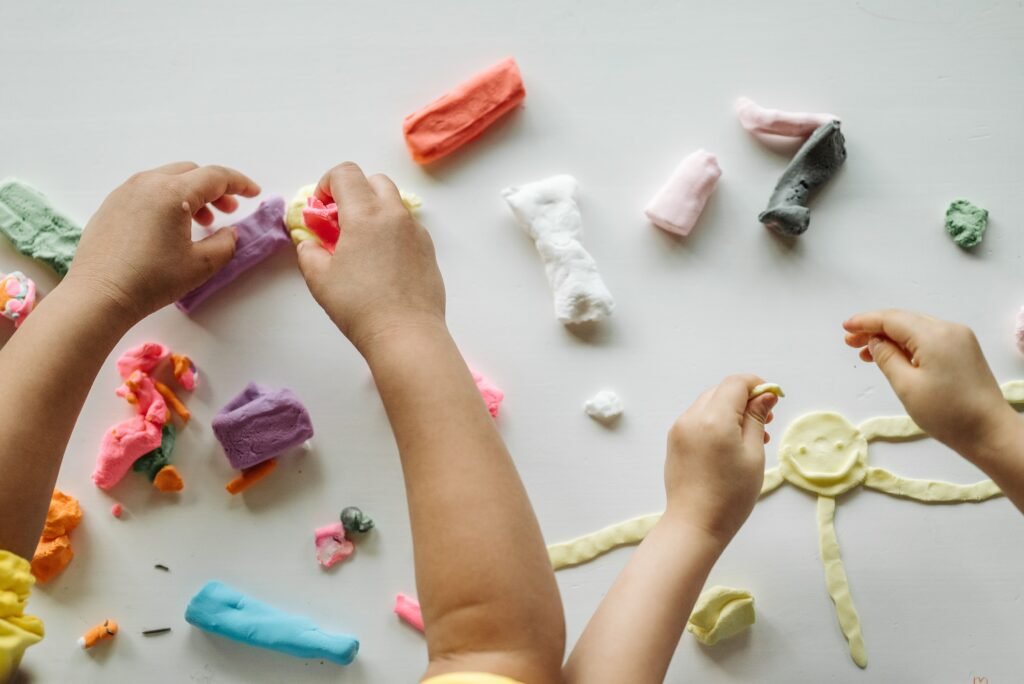
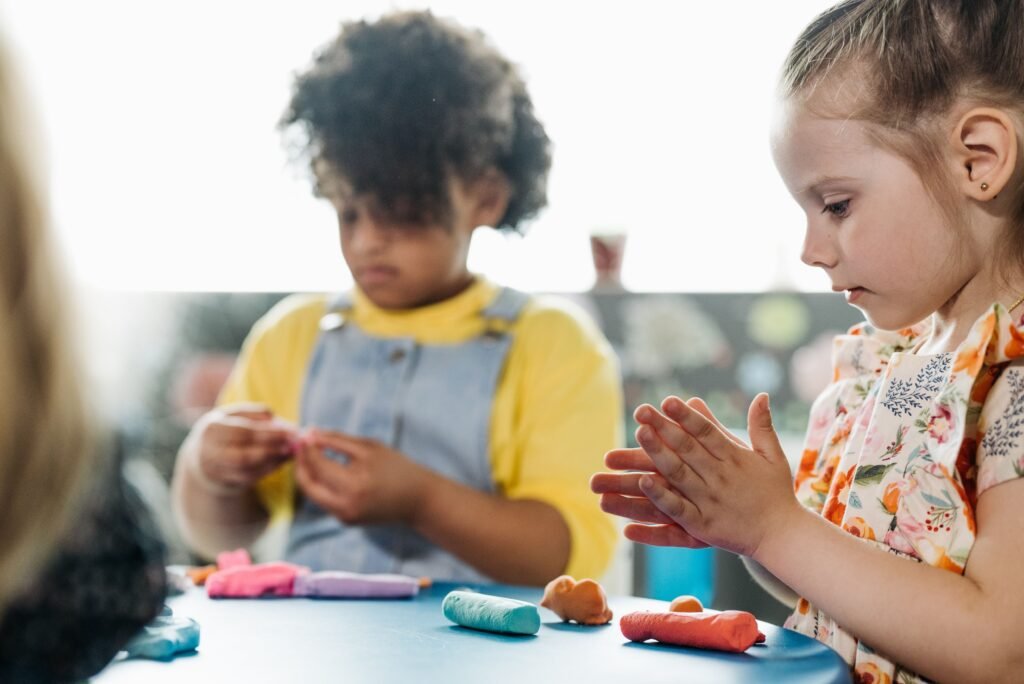
1. Play Dough Squeezing
Play dough remains one of the best educational toys for 3–5 year olds because it strengthens hand muscles while encouraging creativity and sensory exploration.
Materials:
- Play dough
Ask children to roll, squeeze, flatten, pinch, and shape the dough into different objects. Encourage them to create letters, animals, or simple shapes.
Learning Benefits:
- Strengthens hand muscles
- Improves finger control
- Encourages creativity
- Supports pre-writing skills
2. Bead Threading
Threading beads helps children develop coordination and concentration.
Materials:
- Large beads
- String or shoelace
Show children how to thread beads onto the string to create colorful patterns.
Learning Benefits:
- Hand-eye coordination
- Fine finger movements
- Pattern recognition
- Focus and concentration
3. Pom-Pom Transfer with Tweezers
Using tweezers strengthens the same muscles needed for holding pencils.
Materials:
- Pom-poms
- Tweezers
- Small bowls
Challenge children to move pom-poms from one container to another using only tweezers.
Learning Benefits:
- Pincer grip development
- Finger strength
- Coordination
- Concentration
4. Sticker Peeling Activity
Peeling and placing stickers is simple but highly effective for developing finger control.
Materials:
- Stickers
- Paper
Allow children to peel stickers and place them inside shapes or create pictures.
Learning Benefits:
- Finger dexterity
- Precision
- Hand-eye coordination
- Creativity
5. Cutting Practice
Scissor activities help children develop control and coordination.
Materials:
- Child-safe scissors
- Paper strips
Begin with straight lines and gradually introduce curves and shapes.
Learning Benefits:
- Scissor skills
- Bilateral coordination
- Hand strength
- School readiness
6. Clothespin Strength Challenge
Clothespins provide excellent resistance training for small hand muscles.
Materials:
- Clothespins
- Cardboard or containers
Have children clip clothespins around the edges of a container.
Learning Benefits:
- Grip strength
- Finger control
- Hand endurance
- Coordination
7. Lacing Cards
Lacing activities improve hand-eye coordination and precision.
Materials:
- Lacing cards
- String
Children thread the string through holes to complete pictures and patterns.
Learning Benefits:
- Coordination
- Finger control
- Concentration
- Patience
8. Q-Tip Painting
This creative activity helps children practice a pencil-like grip.
Materials:
- Cotton swabs
- Paint
- Paper
Encourage children to create pictures using small dots and patterns.
Learning Benefits:
- Pencil grip development
- Creativity
- Precision
- Hand control
9. Pipe Cleaner Threading
Pipe cleaners and beads make a great fine motor activity.
Materials:
- Pipe cleaners
- Large beads
Children can create bracelets, shapes, and colorful designs.
Learning Benefits:
- Hand strength
- Coordination
- Creativity
- Finger dexterity
10. Paper Tearing Art
Tearing paper requires controlled finger movements.
Materials:
- Colored paper
- Glue
Children tear paper into small pieces and create collages.
Learning Benefits:
- Hand strength
- Coordination
- Creativity
- Fine motor control
11. Button Sorting
Sorting buttons encourages careful manipulation and classification.
Materials:
- Assorted buttons
- Sorting trays
Children can sort by color, size, or shape.
Learning Benefits:
- Finger control
- Observation skills
- Sorting abilities
- Coordination
12. Building Blocks
Building activities are also commonly used in STEM activities for preschoolers because they encourage engineering thinking and problem-solving.
Materials:
- Building blocks
Challenge children to build towers, bridges, and simple structures.
Learning Benefits:
- Precision
- Hand control
- Spatial awareness
- Problem-solving
13. Coin Drop Activity
This simple activity strengthens the pincer grasp used for writing.
Materials:
- Coins or tokens
- Container with slot
Children insert coins through the slot one at a time.
Learning Benefits:
- Finger strength
- Precision
- Hand-eye coordination
- Concentration
14. Sponge Squeezing
Squeezing water from a sponge is a fun way to build hand strength.
Materials:
- Sponges
- Bowl of water
- Empty container
Have children soak the sponge in water and squeeze it into another container.
Learning Benefits:
- Hand strength
- Grip control
- Coordination
- Sensory exploration
15. Hole Punch Art
Using a hole punch requires significant hand strength and control.
Materials:
- Hole punch
- Colored paper
Children can create patterns, borders, or simple artwork using punched holes.
Learning Benefits:
- Hand muscle development
- Precision
- Creativity
- Coordination
16. Peg Board Patterns
Peg boards help children practice controlled finger movements.
Materials:
- Peg board
- Colorful pegs
Challenge children to copy simple patterns or create their own designs.
Learning Benefits:
- Precision
- Pattern recognition
- Concentration
- Hand-eye coordination
17. Finger Painting
Finger painting encourages creativity while strengthening finger muscles.
Materials:
- Washable paint
- Paper
Children can explore colors, shapes, and textures using only their fingers.
Learning Benefits:
- Finger strength
- Creativity
- Sensory development
- Coordination
18. Puzzle Play
Parents often combine puzzles with activity books for preschoolers to provide a balanced mix of hands-on learning and independent practice.
Materials:
- Age-appropriate puzzles
Encourage children to complete puzzles independently and discuss the images they create.
Learning Benefits:
- Problem-solving
- Fine motor control
- Concentration
- Spatial awareness
19. Lego Building Challenge
Building with Lego-style bricks requires precision and planning.
Materials:
- Building bricks
Challenge children to create towers, houses, vehicles, or imaginative structures.
Learning Benefits:
- Finger strength
- Creativity
- Engineering thinking
- Coordination
20. Cotton Ball Transfer
A simple activity that develops careful hand movements.
Materials:
- Cotton balls
- Spoon or tweezers
- Containers
Children transfer cotton balls from one container to another.
Learning Benefits:
- Coordination
- Precision
- Concentration
- Fine motor development
21. Nut and Bolt Matching
Twisting motions strengthen wrists and fingers.
Materials:
- Child-safe nuts and bolts
Children match and screw pieces together.
Learning Benefits:
- Wrist strength
- Hand control
- Problem-solving
- Coordination
22. Tape Rescue Activity
Children love the challenge of peeling tape from surfaces.
Materials:
- Painter’s tape
- Small toys
Tape toys to a table and let children carefully remove the tape to “rescue” them.
Learning Benefits:
- Finger dexterity
- Precision
- Patience
- Coordination
23. Water Dropper Activity
This is one of the easiest indoor activities for preschoolers and can keep children engaged while developing coordination and concentration.
Materials:
- Water droppers
- Water
- Small containers
Children use droppers to move water between containers.
Learning Benefits:
- Finger strength
- Precision
- Hand-eye coordination
- Concentration
24. Scissor Skills Practice
Regular scissor practice improves control and confidence.
Materials:
- Child-safe scissors
- Construction paper
Children can cut along lines, shapes, or simple patterns.
Learning Benefits:
- Hand strength
- Bilateral coordination
- Precision
- School readiness
25. Simple Origami Folding
Paper folding requires careful attention and controlled hand movements.
Materials:
- Paper
Start with easy designs such as boats or simple animals.
Learning Benefits:
- Precision
- Concentration
- Patience
- Fine motor development
Our Top 15 Fine Motor Resources
Many of these activities can be created using everyday household materials. However, if you’re looking for ready-to-use educational toys and learning resources that encourage fine motor development while making playtime even more engaging, we’ve compared some of our favourite options below.
⭐ Editor’s Top 3 Picks
Choosing just three products wasn’t easy, but these stand out for their ability to build multiple fine motor skills through fun, hands-on play. Whether your child is just beginning to develop pencil control or is getting ready for preschool and kindergarten, these are our favorite overall picks.
🥇 Best Overall
Learning Resources Helping Hands Fine Motor Tool Set
If you buy only one resource from this list, this is our top recommendation. The specially designed tweezers, scoops, and tongs strengthen finger muscles, improve the pincer grasp, and build the hand strength children need for writing, cutting, and everyday self-care tasks. It’s widely used by parents, preschool teachers, and occupational therapists, making it one of the most versatile fine motor resources available.
🥈 Best for Pre-Writing Skills
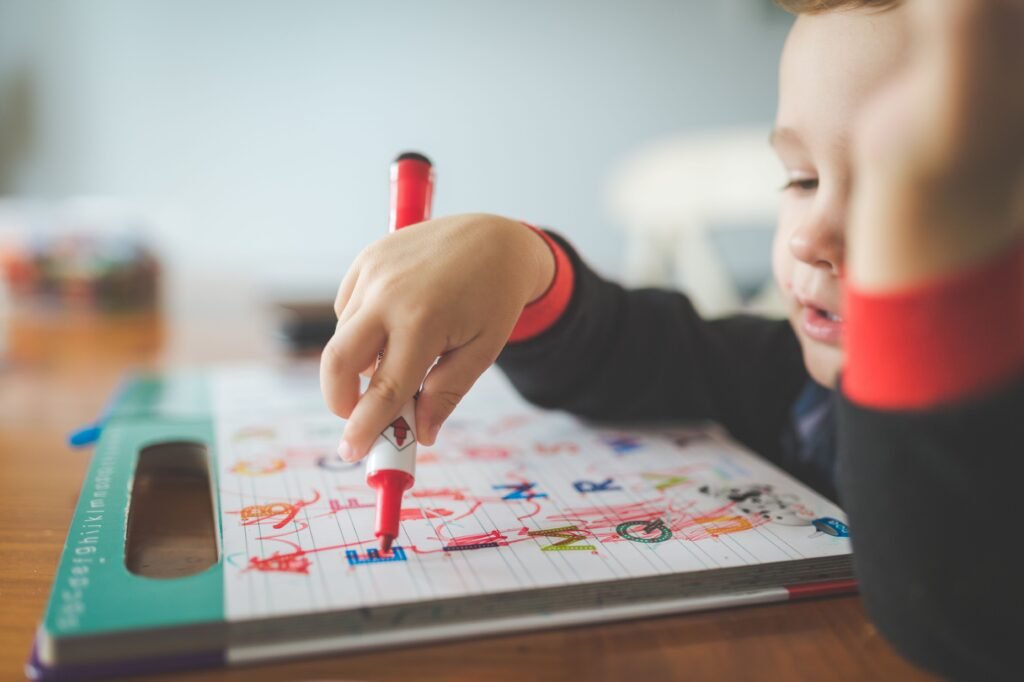
Trace Letters: Alphabet Handwriting Practice workbook for kids: Preschool writing Workbook with Sight words for Pre K, Kindergarten and Kids Ages 3-5
This workbook helps preschoolers develop pencil control while gradually introducing letter formation, sight words, and early writing practice. Its step-by-step approach builds confidence and supports school readiness, making it an excellent choice for children preparing to write independently.
🥉 Best Hands-On Activity
Melissa & Doug Primary Lacing Beads
Threading large wooden beads is one of the best ways to strengthen hand-eye coordination, finger dexterity, and concentration. This classic toy encourages creative play while helping children practice the precise hand movements they’ll later use for writing, buttoning clothes, and tying shoelaces.
Fine Motor Activities by Age
Children develop fine motor skills gradually, so choosing age-appropriate activities helps keep learning enjoyable and frustration-free.
Ages 3–4
Focus on simple activities that strengthen hand muscles and coordination, such as playdough, tearing paper, stacking blocks, finger painting, and large bead threading.
Ages 4–5
Introduce slightly more challenging tasks like tracing, beginner scissors practice, lacing cards, sticker activities, and using tweezers to sort small objects.
Ages 5+
Encourage activities that prepare children for school, including handwriting practice, detailed colouring, origami, puzzle building, and independent craft projects.
Every child develops differently, so always choose activities that match your child’s interests and abilities rather than focusing only on age.
Benefits of Fine Motor Activities for Preschoolers
Fine motor activities do much more than keep children busy. They help build the foundation for important life skills that children use every day.
Better Pencil Control
Strong hand and finger muscles help children learn how to hold pencils, crayons, and markers correctly. This makes writing and drawing easier as they enter school.
Stronger Hand Muscles
Activities such as squeezing play dough, using tweezers, and clipping clothespins help strengthen the muscles needed for writing, cutting, and self-care tasks.
Improved Hand-Eye Coordination
Fine motor activities teach children how to coordinate what they see with how their hands move. This skill is important for reading, sports, crafts, and everyday tasks.
Greater Independence
Children with strong fine motor skills are often more confident performing daily activities such as dressing themselves, eating independently, and managing school supplies.
Increased Confidence
Successfully completing fine motor tasks helps children develop confidence and a positive attitude toward learning.
Fine motor skills develop gradually throughout early childhood and play an important role in helping children become more independent in daily activities such as dressing, eating, drawing, and writing.
Play-based learning activities provide meaningful opportunities for children to strengthen coordination, problem-solving abilities, creativity, and confidence while developing important developmental skills.
Common Fine Motor Challenges (And How to Help)
Some preschoolers naturally need a little more time to develop fine motor skills. Here are a few common challenges parents may notice:
✔ Difficulty holding crayons or pencils
✔ Trouble using child-safe scissors
✔ Weak hand strength during play
✔ Frustration with buttons or zippers
✔ Avoiding drawing or colouring activities
The best approach is to keep practice fun and pressure-free. Short, engaging activities completed regularly often build confidence much more effectively than long practice sessions.
How to Improve Fine Motor Skills at Home
Improving fine motor skills doesn’t require expensive equipment. Many of the best activities use simple household materials that encourage children to practice naturally through play.
Parents can support development by:
- Providing daily opportunities for hands-on play
- Encouraging drawing and coloring
- Offering building toys and puzzles
- Using play dough regularly
- Practicing cutting activities safely
- Allowing children to dress themselves
- Creating simple crafts together
The key is consistency. Even 10 to 15 minutes of fine motor practice each day can help children develop stronger hand muscles and better coordination over time.
How to Choose the Right Fine Motor Toys for Preschoolers
Choosing the right fine motor resources depends on your child’s current stage of development. Some children need help strengthening their finger muscles, while others are ready to practice tracing, cutting, or handwriting. A balanced collection of activities helps children build these skills gradually through play.
When choosing fine motor toys and learning resources, look for:
- Activities that encourage squeezing, pinching, threading, twisting, or cutting.
- Age-appropriate materials that match your child’s current abilities.
- Durable, reusable resources that provide long-term learning value.
- Open-ended toys that encourage creativity and independent play.
- Products that promote hand-eye coordination, pencil control, and problem-solving alongside fine motor development.
Using a variety of fine motor activities for preschoolers rather than relying on a single type of toy helps develop stronger hand muscles, greater coordination, and better school readiness over time. Research consistently shows that hands-on activities such as play dough, bead threading, scissor practice, and tracing support the fine motor development needed for handwriting and everyday self-care tasks.
Frequently Asked Questions
What are fine motor activities for preschoolers?
Fine motor activities for preschoolers are play-based tasks that strengthen the small muscles of the hands and fingers. These activities help children improve coordination, hand strength, pencil control, and independence while preparing them for future school tasks.
Why are fine motor skills important?
Fine motor skills are important because they help children perform everyday tasks such as writing, drawing, cutting, dressing, eating, and using classroom materials. Strong fine motor skills also support academic success and self-confidence.
How can I improve my preschooler’s hand strength?
Activities such as play dough squeezing, clothespin games, water dropper activities, bead threading, and building with blocks are excellent ways to strengthen hand muscles while keeping learning fun and engaging.
What fine motor activities help with writing?
Activities that encourage pencil grip and finger control are especially helpful for writing. Examples include Q-tip painting, tracing, coloring, sticker activities, tweezers games, and scissor practice.
Are fine motor activities suitable for 3-year-olds?
Yes. Many fine motor activities can be adapted for younger preschoolers. Focus on simple, safe activities that encourage exploration and gradually increase difficulty as children develop stronger skills.
How often should preschoolers practice fine motor skills?
Short daily practice sessions are often more effective than occasional longer sessions. Most children benefit from 10–20 minutes of fine motor activities each day through play and everyday tasks.
Final Thoughts
Fine motor activities for preschoolers help children develop the hand strength, coordination, and confidence needed for everyday tasks and future academic success. Through simple activities such as threading beads, building with blocks, using tweezers, and creating art, children can strengthen important skills while having fun.
The best approach is to make learning playful and consistent. With regular opportunities to explore, create, and practice, preschoolers can build strong fine motor skills that support their growth, independence, and love of learning. The goal isn’t perfection—it’s helping your child enjoy learning through play. Even just 10 to 15 minutes of fun fine motor practice each day can build confidence, strengthen hand muscles, and support future success in writing, self-care, and everyday activities.
Related Preschool Learning Resources
Looking for more ways to support your preschooler’s learning and development? Explore our collection of expert guides featuring indoor and outdoor activities, educational toys, STEM projects, sensory play, fine and gross motor activities, kindergarten readiness tips, screen-free ideas, and the best activity books for preschoolers. These practical resources are designed to make learning fun, engaging, and meaningful every day.
- Best Activity Books for Preschoolers
- Indoor Activities for Preschoolers on Rainy Days
- Best Educational Toys for 3–5 Year Olds
- STEM Activities for Preschoolers
- Screen-Free Activities for Kids Ages 3–5
- Gross Motor Activities for Preschoolers
- Kindergarten Readiness Activities
- Sensory Activities for Preschoolers
- Outdoor Activities for Preschoolers