
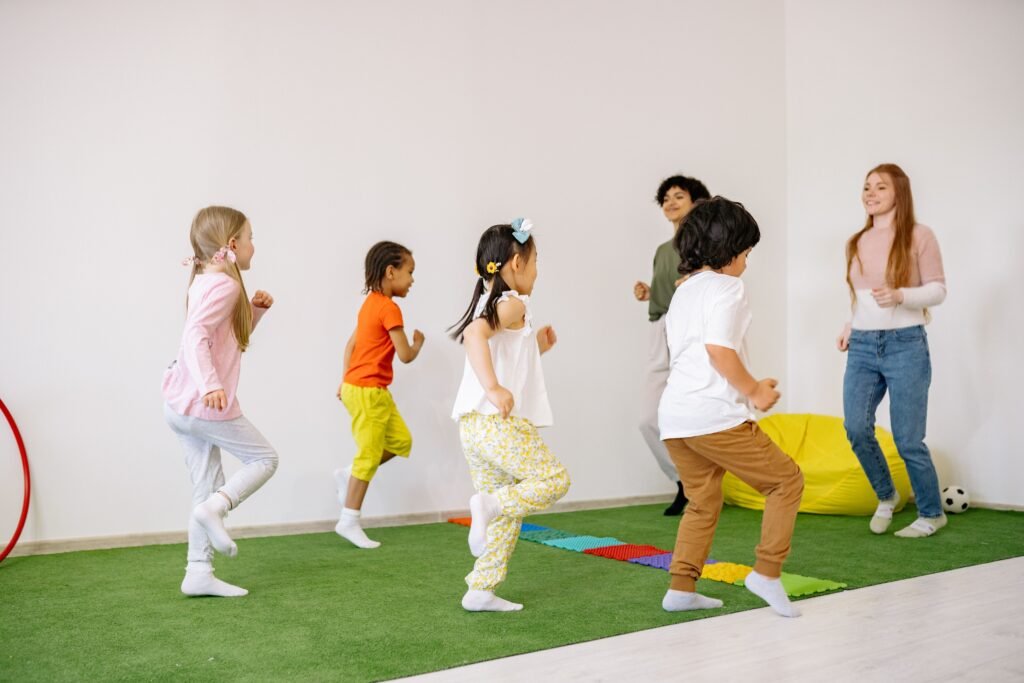
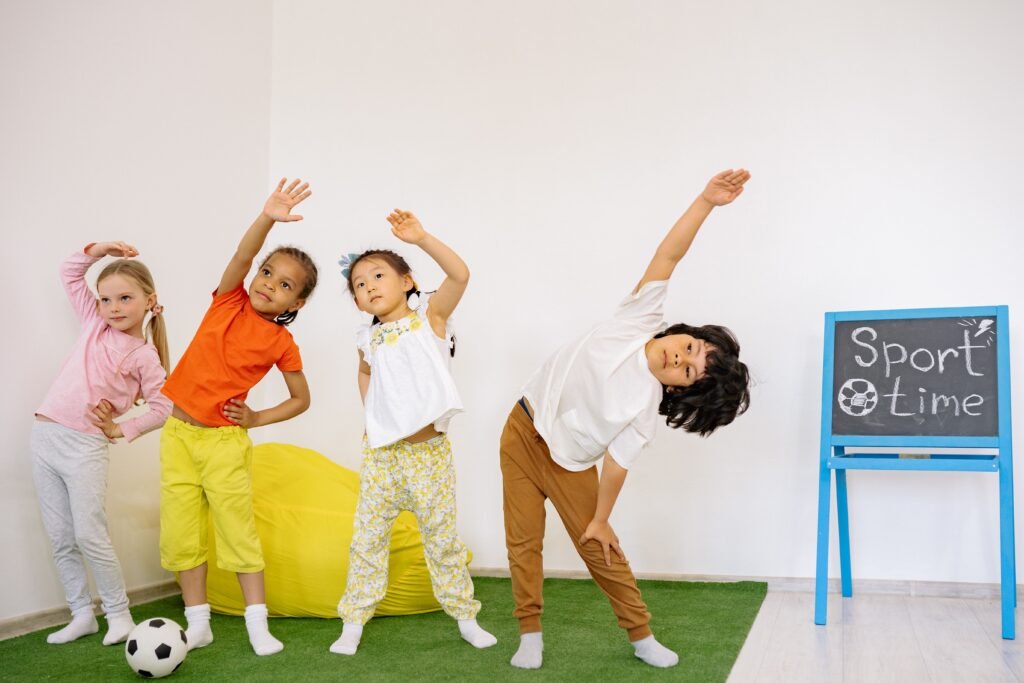
Gross motor activities for preschoolers are essential for helping young children develop strength, balance, coordination, and body awareness. These skills involve the large muscles of the arms, legs, and core, which children use for activities such as running, jumping, climbing, throwing, and balancing.
During the preschool years, active play is one of the most important ways children learn and grow. Gross motor development not only supports physical health but also improves confidence, social skills, concentration, and overall well-being. Children who regularly participate in movement-based activities often find it easier to develop coordination and independence as they grow.
Many of these activities also work perfectly as screen-free activities for kids ages 3–5, giving children opportunities to stay active, explore their environment, and build healthy habits without relying on digital entertainment.
Whether you’re looking for indoor movement games, outdoor adventures, or simple activities to burn off extra energy, these gross motor activities for preschoolers will help children strengthen their bodies while having fun.
Table of Contents
Why Gross Motor Activities for Preschoolers Matter
Gross motor skills involve the large muscles that control major body movements. These skills allow children to perform everyday actions such as walking, running, jumping, climbing, balancing, and throwing.
Strong gross motor skills help preschoolers:
- Improve balance and coordination
- Build strength and endurance
- Develop body awareness
- Increase confidence during physical activities
- Support participation in sports and playground activities
- Improve posture and movement control
Physical activity also helps children release energy, improve focus, and develop healthy habits that can benefit them throughout life.
25 Gross Motor Activities for Preschoolers
1. Obstacle Course Adventure
Obstacle courses are one of the most effective gross motor activities because they combine multiple movement skills into one exciting challenge.
Materials:
- Pillows
- Chairs
- Cones
- Blankets
Create a course where children crawl under tables, jump over pillows, balance along tape lines, and weave around objects.
Learning Benefits:
- Balance
- Coordination
- Problem-solving
- Full-body strength
2. Animal Walks
Animal walks encourage children to move their bodies in different ways while strengthening muscles.
Materials:
- Open space
Ask children to move like:
- Bears
- Frogs
- Crabs
- Kangaroos
- Ducks
Learning Benefits:
- Core strength
- Coordination
- Creativity
- Body awareness
3. Hopscotch Fun
Hopscotch helps children practice balance and jumping skills.
Materials:
- Chalk
- Tape
Draw a simple hopscotch pattern and encourage children to hop through the squares.
Learning Benefits:
- Balance
- Leg strength
- Coordination
- Number recognition
4. Jumping Challenge
Jumping activities help develop lower-body strength and control.
Materials:
- Floor markers
- Tape
Challenge children to jump:
- Forward
- Backward
- Sideways
- Over small obstacles
Learning Benefits:
- Leg strength
- Coordination
- Balance
- Confidence
5. Balance Beam Walk
Balancing activities strengthen stability and concentration.
Materials:
- Tape line on floor
- Low balance beam
Ask children to walk carefully from one end to the other without stepping off.
Learning Benefits:
- Balance
- Focus
- Core strength
- Body control
6. Balloon Volleyball
This simple game keeps children active while improving coordination.
Materials:
- Balloon
Players try to keep the balloon from touching the ground.
Learning Benefits:
- Hand-eye coordination
- Movement control
- Reaction time
- Social skills
7. Dance Freeze Game
Children love dancing, making this activity both fun and educational.
Materials:
- Music player
Play music and let children dance. When the music stops, everyone must freeze in place.
Learning Benefits:
- Listening skills
- Balance
- Self-control
- Coordination
8. Simon Says Movement Edition
Simon Says can easily become a gross motor activity.
Materials:
- None
Examples:
- Touch your toes
- Jump three times
- Stand on one foot
- Spin in a circle
Learning Benefits:
- Listening skills
- Body awareness
- Coordination
- Concentration
9. Bean Bag Toss
Throwing and aiming activities build coordination.
Materials:
- Bean bags
- Buckets
Children toss bean bags into targets placed at different distances.
Learning Benefits:
- Hand-eye coordination
- Accuracy
- Motor planning
- Focus
10. Nature Scavenger Hunt
This activity combines movement with exploration.
Materials:
- Nature checklist
Ask children to find:
- Leaves
- Flowers
- Rocks
- Sticks
Learning Benefits:
- Observation skills
- Physical activity
- Exploration
- Problem-solving
11. Hula Hoop Fun
Hula hoops can be used in many creative ways.
Materials:
- Hula hoops
Children can:
- Jump in and out
- Roll hoops
- Use them as obstacle markers
Learning Benefits:
- Coordination
- Balance
- Agility
- Creativity
12. Building a Movement Course
Building activities are also commonly used in STEM activities for preschoolers because they encourage planning, problem-solving, and creative thinking.
Materials:
- Blocks
- Cones
- Tunnels
Allow children to design their own movement path and then complete it.
Learning Benefits:
- Creativity
- Engineering thinking
- Coordination
- Confidence
13. Wheelbarrow Walks
This activity strengthens the upper body and core muscles.
Materials:
- Open space
One adult holds the child’s legs while the child walks on their hands for a short distance.
Learning Benefits:
- Upper-body strength
- Core stability
- Coordination
- Balance
14. Bear Crawls
Bear crawls are a fun way to strengthen muscles while improving coordination.
Materials:
- Open space
Children move forward on their hands and feet while keeping their knees off the ground.
Learning Benefits:
- Core strength
- Upper-body development
- Coordination
- Endurance
15. Frog Jumps
Frog jumps help children develop powerful leg muscles and balance.
Materials:
- Open space
Ask children to squat down and jump forward like frogs.
Learning Benefits:
- Leg strength
- Balance
- Coordination
- Body awareness
16. Follow the Leader
This classic game encourages children to imitate different movements.
Materials:
- None
The leader performs actions such as hopping, skipping, spinning, or marching, and everyone else follows.
Learning Benefits:
- Listening skills
- Coordination
- Balance
- Social interaction
17. Red Light, Green Light
This movement game helps children practice body control and self-regulation.
Materials:
- Open space
Children move when “green light” is called and stop immediately when they hear “red light.”
Learning Benefits:
- Self-control
- Balance
- Listening skills
- Coordination
18. Soccer Dribbling Practice
Simple soccer activities improve coordination and movement skills.
Materials:
- Soft ball
Children practice kicking and guiding the ball around obstacles.
Learning Benefits:
- Foot-eye coordination
- Balance
- Agility
- Confidence
19. Bowling Game
Indoor bowling is an excellent gross motor activity for rainy days.
Materials:
- Plastic bottles
- Soft ball
Set up bottles as pins and encourage children to knock them down.
Learning Benefits:
- Coordination
- Accuracy
- Strength
- Concentration
Parents looking for additional movement ideas can also explore indoor activities for preschoolers that keep children active and engaged even when outdoor play isn’t possible.
20. Target Throwing Game
Throwing activities improve arm strength and accuracy.
Materials:
- Bean bags
- Buckets or targets
Children aim at targets placed at different distances.
Learning Benefits:
- Hand-eye coordination
- Motor planning
- Strength
- Focus
21. Movement Dice Game
This activity combines learning and physical movement.
Materials:
- Large dice
Assign movements to each number.
Examples:
- 1 = Jump
- 2 = Spin
- 3 = Hop
- 4 = Run in place
- 5 = March
- 6 = Dance
Learning Benefits:
- Following directions
- Coordination
- Creativity
- Physical activity
22. Yoga for Preschoolers
Simple yoga poses help children develop flexibility and balance.
Materials:
- Yoga mat (optional)
Try poses such as:
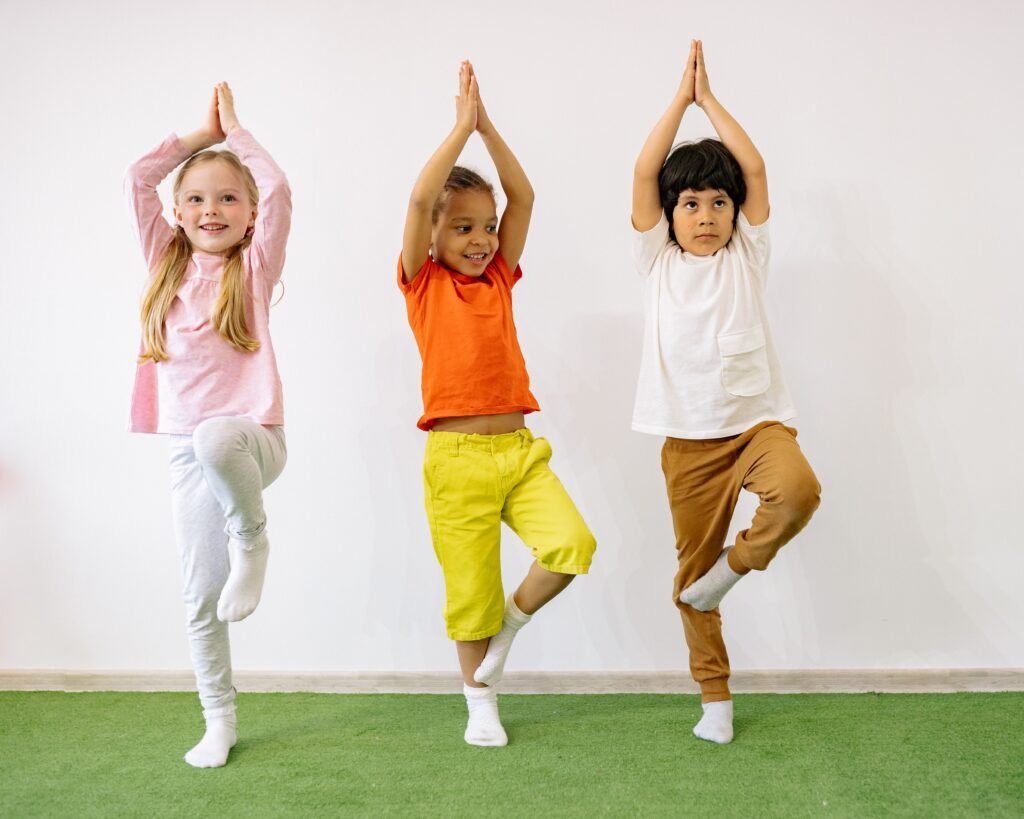
- Tree Pose
- Cat-Cow Pose
- Butterfly Pose
Learning Benefits:
- Balance
- Flexibility
- Concentration
- Body awareness
23. Relay Race Fun
Relay races encourage teamwork and active play.
Materials:
- Cones or markers
Create simple races involving running, hopping, or carrying objects.
Learning Benefits:
- Speed
- Coordination
- Social skills
- Teamwork
24. Balance and Stepping Stone Challenge
Balance activities are among the best educational toys for 3–5 year olds because they help children improve coordination, confidence, and physical development through active play.
Materials:
- Stepping stones
- Cushions
- Floor markers
Children move from one marker to another without touching the floor.
Learning Benefits:
- Balance
- Coordination
- Confidence
- Motor planning
25. Playground Climbing Adventure
Climbing is one of the most natural ways for children to build strength and coordination.
Materials:
- Playground equipment
Supervise children as they climb ladders, structures, and playground features safely.
Learning Benefits:
- Strength
- Coordination
- Problem-solving
- Confidence
Compare Our Favorite Gross Motor Toys
Looking for toys that encourage active movement and healthy physical development? We’ve compared our favorite gross motor toys—from balance beams and stepping stones to ride-on toys and climbers—to help you choose the best option for your preschooler.
⭐ Top 5 Editor’s Picks for Gross Motor Development ⭐
Looking to make gross motor activities for preschoolers even more exciting? These editor-selected toys encourage active movement, balance, coordination, and confidence through play. Carefully chosen for their educational value, durability, and parent-approved quality, these products are excellent companions to the gross motor activities for preschoolers featured in this guide.
🥇 Best Overall
National Geographic Kids Stepping Stones & Balance Beams
A complete obstacle course that helps preschoolers improve balance, coordination, agility, and confidence. The modular pieces allow children to create new paths every time they play, making it one of the most versatile gross motor toys available.
🥈 Best Ride-On
Radio Flyer Scoot 2 Scooter
This beginner-friendly ride-on easily converts into a four-wheel scooter, helping children build balance, coordination, and confidence as they grow.
🥉 Best for Active Play
VEVOR 3FT Kids Trampoline
Perfect for burning energy indoors or outdoors while improving balance, leg strength, endurance, and body coordination through safe jumping play.
⭐ Best Montessori Pick
Gentle Monster Wobble Balance Board
An open-ended Montessori toy that encourages balancing, rocking, imaginative play, and full-body movement while supporting vestibular development.
⭐ Best Premium Climber
BlueWood Pikler Triangle Set
A beautifully designed climbing set that promotes strength, confidence, balance, and independent movement through Montessori-inspired active play.
Signs of Strong Gross Motor Development
Most preschoolers gradually develop gross motor skills through active play. Your child may be on the right track if they can:
✔ Run and stop without losing balance
✔ Jump with both feet together
✔ Climb playground equipment confidently
✔ Throw and kick a ball with control
✔ Balance on one foot for a few seconds
✔ Walk up and down stairs with little assistance
Remember that every child develops at their own pace. Regular movement and encouragement are more important than perfection.
Benefits of Gross Motor Activities for Preschoolers
Gross motor activities support much more than physical fitness. They help children develop important life skills that contribute to healthy growth and learning.
Improved Balance and Coordination
Activities such as hopping, balancing, and climbing teach children how to control their movements more effectively.
Stronger Muscles and Bones
Running, jumping, crawling, and active play help strengthen muscles and support healthy physical development.
Better Body Awareness
Gross motor activities teach children how their bodies move in space, improving coordination and confidence.
Increased Confidence
Mastering physical skills helps children feel more capable and willing to try new activities.
Support for Fine Motor Development
While gross motor skills involve large muscle groups, they also support the development of fine motor activities for preschoolers by strengthening posture, stability, and overall body control.
Active play is essential for healthy growth during the preschool years. Activities such as running, jumping, climbing, and balancing help children develop stronger muscles, better coordination, and improved overall fitness. Research on active play for preschoolers also highlights its role in supporting physical, social, and emotional development while encouraging healthy movement habits from an early age.
Regular movement experiences help children build confidence as they master new skills and challenges. Following physical activity guidelines for young children can support balance, coordination, body awareness, and self-esteem while encouraging children to stay active and engaged throughout the day.
How to Encourage Gross Motor Development at Home
Children do not need expensive equipment to develop gross motor skills. Everyday activities can provide valuable opportunities for movement and learning.
Parents can encourage development by:
- Providing daily active play time
- Limiting sedentary screen time
- Visiting parks and playgrounds
- Playing movement games together
- Creating simple obstacle courses
- Encouraging outdoor exploration
- Offering opportunities to climb, jump, and balance safely
The goal is to make movement fun and part of everyday life. Remember to choose activities that match your child’s age and ability. Offering praise, encouragement, and plenty of opportunities to move helps build confidence and encourages a lifelong love of physical activity. Consistent physical activity helps children build strength, coordination, and confidence over time.
Frequently Asked Questions
What are gross motor activities for preschoolers?
Gross motor activities for preschoolers involve movements that use large muscle groups, such as running, jumping, climbing, balancing, and throwing. These activities help children build strength, coordination, and confidence while supporting healthy physical development.
Why are gross motor skills important?
Gross motor skills help children perform everyday movements safely and confidently. They support balance, coordination, posture, physical fitness, and participation in sports, playground activities, and school routines.
What is the difference between gross motor and fine motor skills?
Gross motor skills use large muscle groups for activities such as running and jumping, while fine motor skills involve smaller hand and finger movements used for writing, drawing, and cutting.
How can I improve my preschooler’s gross motor skills?
Encourage active play through obstacle courses, climbing, dancing, ball games, balance activities, and outdoor exploration. Consistent opportunities for movement help children develop stronger motor skills.
Are gross motor activities suitable indoors?
Yes. Activities such as balloon volleyball, bowling, dance games, yoga, obstacle courses, and movement dice games can easily be adapted for indoor spaces.
How much physical activity do preschoolers need?
Most preschoolers benefit from several hours of active play throughout the day. Regular movement helps support healthy growth, learning, and overall well-being.
Final Thoughts
Gross motor activities for preschoolers play an important role in helping children develop strength, coordination, balance, and confidence. Through active play, children learn how to control their movements, explore their environment, and build healthy habits that support lifelong development.
Whether it’s running through an obstacle course, balancing on stepping stones, dancing to music, or climbing at the playground, every movement experience helps preschoolers grow stronger and more confident. By making physical activity a regular part of daily life, parents and caregivers can support healthy development while creating fun and memorable learning experiences.
Related Preschool Learning Resources
Looking for more ways to support your preschooler’s learning and development? Explore our collection of expert guides featuring indoor and outdoor activities, educational toys, STEM projects, sensory play, fine and gross motor activities, kindergarten readiness tips, screen-free ideas, and the best activity books for preschoolers. These practical resources are designed to make learning fun, engaging, and meaningful every day.
- Best Activity Books for Preschoolers
- Indoor Activities for Preschoolers on Rainy Days
- Best Educational Toys for 3–5 Year Olds
- STEM Activities for Preschoolers
- Fine Motor Activities for Preschoolers
- Screen-Free Activities for Kids Ages 3–5
- Kindergarten Readiness Activities
- Sensory Activities for Preschoolers
- Outdoor Activities for Preschoolers